Reviewing the World’s Coolest Nurse Design for Stitch
As an embroidery designer who has spent years digitizing and testing files for real-world production, I approach every new machine embroidery design with a critical eye. It is not enough for a graphic to look good on a screen; it must survive the needle, the thread tension, and the wash cycle. Recently, I evaluated the World’s Coolest Nurse Design, a typography-focused vector asset listed under Print Templates and Graphics. While the source description highlights its utility for t-shirt stores and digital platforms, my focus was strictly on how this design translates into physical stitched products for craft businesses and boutique owners.
First Impressions and Visual Personality
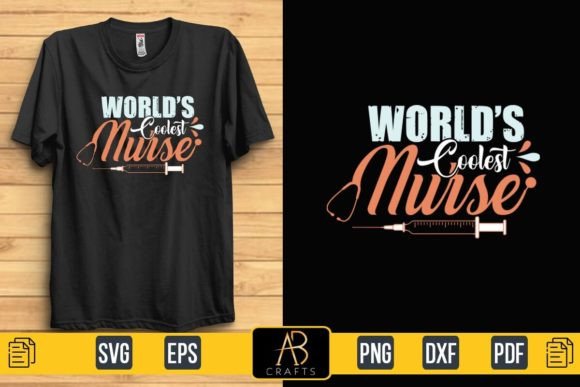
The immediate appeal of the World’s Coolest Nurse Design lies in its bold, confident typography. In the world of medical appreciation gifts, designs often lean heavily into clichés like stethoscopes or hearts. This design takes a different route, relying on strong letterforms to carry the message. For an embroidery project, this is both a blessing and a challenge. The mood is modern, playful, and professional, making it suitable for a wide demographic of nursing staff, from students to seasoned practitioners.
From a layout perspective, the design feels balanced. However, because it is primarily typographic, the visual weight is distributed differently than an illustrative piece. When I visualize this as an embroidered patch or a chest logo on a scrub top, the clarity of the letters becomes the single most important factor. There is no intricate shading to hide behind; the stitch quality must be precise to maintain legibility.
Real-World Application Scenarios
To truly test the viability of this design, I imagined several common production scenarios that Etsy sellers and small shop owners frequently encounter. The first scenario involved a custom tote bag. A canvas tote provides a stable, flat surface that is ideal for typography. Here, the World’s Coolest Nurse Design would likely perform well, provided the stitch density is adjusted to prevent puckering on the woven fabric. The contrast between bright thread colors and natural canvas would make the text pop, creating a high-value handmade product that feels substantial and durable.
Another practical application is sweatshirt embroidery. This is a popular category for holiday gifts and team apparel. On a fleece or cotton-blend sweatshirt, the design needs to sit comfortably without feeling stiff. If the original vector is converted into a dense fill stitch without proper underlay, it could create a hard patch that irritates the wearer. For a personalized gift, comfort is just as important as aesthetics. I would recommend using a combination of satin stitches for smaller elements and lighter fill stitches for larger letter areas to maintain flexibility.
For those producing baby embroidery items, such as onesies or burp cloths, caution is required. The scale of the text must be reduced significantly. Tiny lettering can easily become illegible if the stitch count is too high for the small hoop size. In this context, the design might need simplification to ensure it remains readable after washing.
Technical Considerations for Stitchers
When working with typography-based design assets, technical execution is everything. The World’s Coolest Nurse Design requires careful attention to stitch density. Dense stitching on thin fabric, such as performance scrubs or lightweight tees, will cause distortion. Always use an appropriate stabilizer. For stretchy fabrics, a cut-away stabilizer is non-negotiable to prevent the design from warping over time. For woven fabrics like aprons or tea towels, a tear-away stabilizer may suffice, but testing is essential.
Thread color contrast is another critical element. Since this is a text-heavy design, the thread must stand out against the fabric. White thread on a light gray shirt will vanish, while dark navy on black fabric will lack definition. I advise running test stitches on scrap fabric in both light and dark backgrounds to determine the optimal thread colors. Additionally, check whether the design includes underlay stitches. Proper underlay anchors the top stitches and prevents them from sinking into plush fabrics like towels or fleece.
Navigating Fabric and Hoop Constraints
Not all projects are created equal. Curved surfaces, such as caps or hats, present a unique challenge for wide typography. The World’s Coolest Nurse Design may need to be arched or broken into smaller segments to fit comfortably on a cap front without distorting the fabric grain. Similarly, detailed corners in lettering can trap threads or cause jumps if the digitizing is not clean. Inspect the file for excessive travel stitches or unnecessary trims that could slow down production.
If you are creating an applique design version of this concept, consider using fabric letters instead of stitching the entire text. This reduces stitch count, saves time, and adds texture. However, ensure the original vector allows for clean cutting lines. For standard embroidery, verify the recommended hoop size. Trying to cram a large typographic design into a 4x4 inch hoop will result in cramped, unreadable text. Always match the design scale to the hoop capacity.
Commercial Viability and Brand Trust
For commercial embroidery professionals, the perceived value of the finished product drives sales. A clean, crisp execution of the World’s Coolest Nurse Design signals professionalism. Sloppy stitching, on the other hand, undermines customer trust. Buyers of medical-themed apparel are often looking for durability and pride in their profession. A well-stitched design reinforces brand consistency for boutique owners and increases the likelihood of repeat business.
When listing this item on your online store, use high-quality printable mockup images that show the texture of the stitches. Digital previews can be misleading. Show the design on actual garments to give customers a realistic expectation of the finished product. Highlight the versatility of the design for various items, from tote bag design concepts to holiday embroidery gifts for healthcare workers.
Final Designer Notes
Before committing to a large production run, always digitize or convert the vector file with care. The source description mentions it is a vector for t-shirt design, which means it is not yet an embroidery file. You will need to use digitizing software to convert the paths into stitches. Pay close attention to the direction of the satin stitches and the density of the fills. Test the design on the specific fabric you intend to use. Check for pull compensation, especially if using stretchy materials.
Furthermore, confirm the licensing terms. Just because a file is available as a graphic does not automatically grant rights for commercial embroidery sales. Ensure you have the correct license to sell custom apparel or digital products featuring this design. By taking these practical steps, you can transform a simple vector graphic into a high-quality, marketable embroidery asset that resonates with nurses and healthcare heroes alike.