Reviewing the Nurse Hope Design for Embroidery
As a designer who has spent countless hours digitizing and testing machine embroidery design files, I approach every new asset with a critical eye. It is not just about whether the image looks good on a screen; it is about how it translates to thread, fabric, and ultimately, the hands of the customer. Recently, I evaluated the A Nurse Will Always Give Us Hope Tshirt graphic to determine its viability for real-world stitching projects. While the product description positions this primarily within T-Shirt Designs and Graphics, my focus was on adapting these visual elements for tangible, stitched applications.
First Impressions and Visual Mood
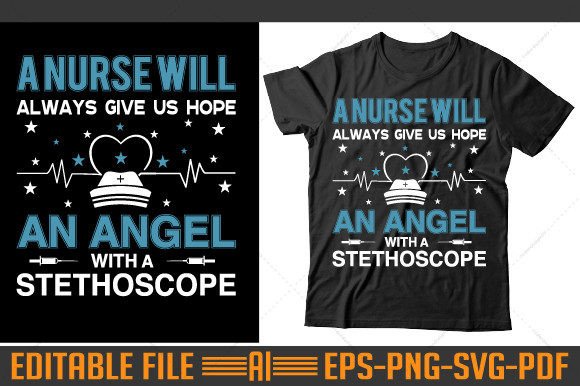
The core theme of this design—pairing the sentiment "A nurse will always give us hope" with the imagery of an angel and a stethoscope—creates an immediate emotional connection. In the world of custom apparel and personalized gift items, emotion drives sales. The layout suggests a balance between professional medical symbolism and soft, comforting spirituality. For an embroidery project, this duality presents both opportunities and challenges. The concept is strong, but the execution in thread requires careful planning. The visual personality feels warm and appreciative, making it ideal for healthcare workers, nursing students, or families honoring a medical hero.
When I first examined the design assets, I looked for clarity. Does the angel motif have defined edges that can be captured by a satin stitch or fill stitch? Is the text legible when scaled down? These are the questions that separate a pretty picture from a functional embroidery file. The inclusion of a "storeroom of documents" in the product description hints at comprehensive resources, which is crucial for ensuring completeness in cutting or printing requirements. However, for embroidery, we must look beyond print-ready vectors.
Real-World Application Scenarios
To truly test the value of this design, I imagined several practical scenarios where it could shine. Consider a tote bag design for a nursing graduation gift. A canvas tote provides a stable, flat surface that handles dense stitching well. Here, the hopeful message could be rendered in a bold, readable font, with the angel and stethoscope acting as a central focal point. The texture of the canvas would complement the raised nature of the threads, adding a tactile quality that print cannot achieve.
Another strong candidate is sweatshirt embroidery. Hoodies and crewnecks are staples in collegiate and professional wardrobes. Placing this design on the left chest or as a larger back piece could create a statement item. However, fleece and cotton blends behave differently than t-shirt jersey. The pile of the fabric can swallow small details, so I would recommend simplifying any intricate lines in the angel’s wings or the stethoscope tubing. This ensures the finished product remains crisp and recognizable from a distance.
For those running a craft business or operating as an Etsy seller, expanding into embroidered patch production is a smart move. Patches allow customers to add the design to existing uniforms or bags without altering the garment permanently. Using an applique design technique here could reduce stitch count and bulk, making the patch lighter and more flexible. This approach also allows for creative fabric choices within the design itself, such as using a sheer organza for the angel’s wings to create a delicate effect.
Technical Considerations for Stitchers
Transitioning from a graphic to a stitched reality requires technical vigilance. One of the primary concerns with text-heavy designs like A Nurse Will Always Give Us Hope Tshirt is legibility. If you are working with a small hoop size, such as a 4x4 inch frame, the lettering may become too dense or small to read clearly. In such cases, I advise removing the text and focusing solely on the angel and stethoscope icon, or vice versa. Never try to cram a complex sentence into a tiny space; it results in a muddy, unprofessional look.
Stitch density is another critical factor. Medical symbols like the stethoscope often contain thin lines and curves. If the digitizer has used too many running stitch passes without proper underlay, the design may pucker the fabric. Conversely, excessive fill stitches can make the garment stiff and uncomfortable to wear. Always check the stitch path simulation if your software allows it. Look for jumps that are too long, which might require tie-offs to prevent loose threads on the back of the handmade product.
Fabric choice dictates success. On dark fabrics, you must ensure high contrast in your thread colors. A white or light blue thread against navy scrubs fabric works beautifully, but pastel threads may disappear. On stretchy fabrics, such as performance blends used in modern medical scrubs, a cut-away stabilizer is non-negotiable. Without it, the tension of the stitches will distort the garment over time, especially after repeated washing. Always test the design on scrap fabric that matches your final material before committing to the final piece.
Commercial Viability and Brand Trust
For small shop product creators, the perceived value of embroidery is higher than print. A stitched design conveys durability and care. When a customer buys a holiday embroidery gift or a baby embroidery item featuring this nurse theme, they are buying into a narrative of care and hope. The quality of your stitching directly impacts their trust in your brand. Sloppy tension or missed stitches can undermine the heartfelt message of the design.
It is also essential to consider licensing. The product description mentions documents for completeness, but it does not explicitly state commercial rights for embroidery. Before selling commercial embroidery items or including this in a digital embroidery file pack, verify the license terms. Many graphic licenses do not automatically cover machine embroidery resale. Protect your business by confirming you have the right to use the artwork in stitched goods.
Final Designer Notes
Before launching this design in your embroidery project lineup, take these practical steps:
- Test the design on various fabric weights to gauge puckering.
- Check thread color contrast on both light and dark backgrounds.
- Verify that small details in the stethoscope and angel wings do not break during stitching.
- Confirm the license allows for commercial use in physical goods.
- Create printable mockup images to show customers how the design looks on different items like aprons or caps.
The A Nurse Will Always Give Us Hope Tshirt concept holds significant potential for the embroidery market. By respecting the technical limits of the medium and choosing the right applications, you can transform this graphic into a cherished personalized gift or a best-selling small business merchandise item. Remember, the goal is not just to stitch a design, but to deliver a feeling of hope and appreciation through every loop of thread.